Pantry pest infestations pose a direct sanitary threat to dry goods stored in residential pantries, commercial larders, and historic kitchen cabinetry. In neighborhoods like the Old West End and Five Points, older wood…
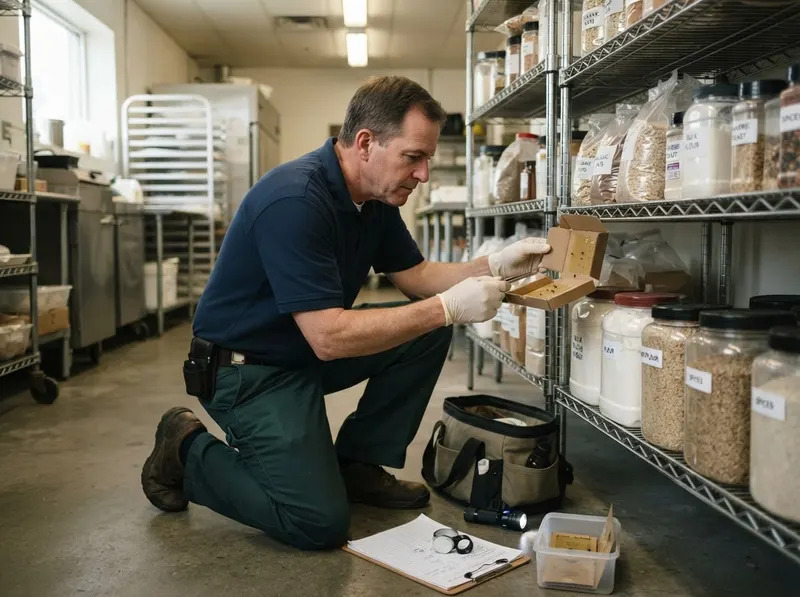
Pantry pest infestations pose a direct sanitary threat to dry goods stored in residential pantries, commercial larders, and historic kitchen cabinetry. In neighborhoods like the Old West End and Five Points, older wood cabinetry contains deep, unsealed mortise joints and micro-cracks where spilled grain dust, semolina, and cereal starches accumulate over decades. These dark micro-voids create breeding harborage for Indian meal moth larvae and flour beetles. Unlike standard pest treatments that rely on broad-spectrum baseboard sprays, stored product pest interception uses mechanical removal, HEPA extraction, botanical desiccant dusts in void spaces, and targeted pheromone disruptors. This approach eliminates the reproductive cycle without leaving residual chemical poisons on surfaces where food is prepared.
In moisture-prone areas near the Maumee River such as Point Place and the Warehouse District, humidity accelerates mold growth within grain products, drawing secondary feeders like sawtoothed grain beetles and foreign grain beetles. If larvae or webbing are detected only in a single dry-goods box, homeowner containment in airtight borosilicate glass or thick polyethylene containers may resolve the issue; however, if adult moths are observed flying near ceilings around Ottawa Park or larvae crawl up pantry wall seams in Beverly, comprehensive interception is necessary. The trade-off between total pantry disposal and precision salvage comes down to time and cross-contamination risk: discarding all unsealed paper-packaged goods prevents secondary outbreaks, while mechanical interception preserves properly sealed, uncontaminated reserves.
Technicians follow an objective, step-by-step mitigation process. 1. Technicians empty pantry shelves to inspect every grain, nut, dried fruit, and pet food package for larval webbing and pupal casings. 2. Infested source materials are isolated into 3-mil poly bags and removed from the structure. 3. Shelves and peg holes undergo high-efficiency particulate air (HEPA) vacuum extraction to capture microscopic eggs and spilled flour dust. 4. Wall voids and unsealed cabinet joints receive microscopic applications of food-grade diatomaceous earth or amorphous silica gel. 5. Species-specific sex-attractant pheromone sticky traps are calibrated and installed at a density of 1 trap per 100 square feet to monitor residual adult insect emergence for 30 days.
Every job gets a firm, written price after a free on-site visit.
Tell us about your stored product pest interception job in Toledo and we'll send a clear, written quote, usually the same day.
 TerraSafe Pest Co.