Targeted bed bug remediation in Toledo balances complete biological eradication with non-hazardous material selection to safeguard household living areas. Conventional pest extermination often relies on synthetic…
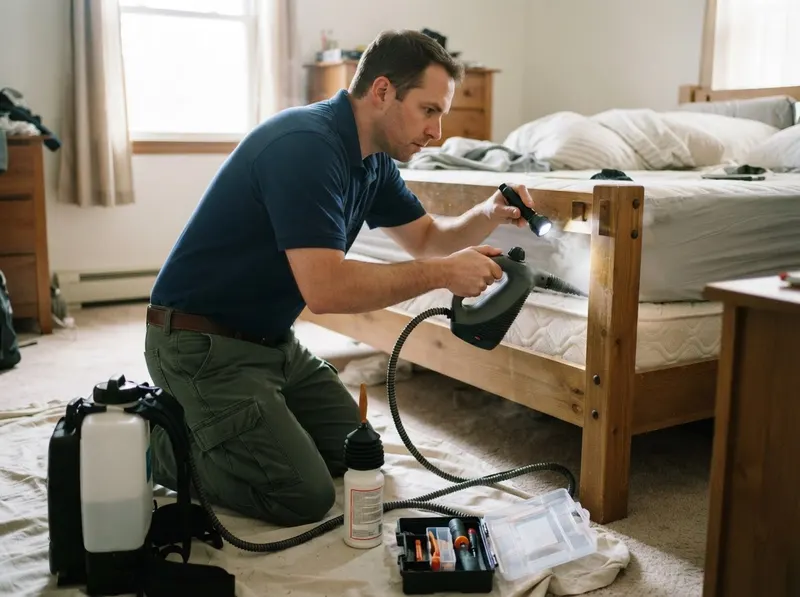
Targeted bed bug remediation in Toledo balances complete biological eradication with non-hazardous material selection to safeguard household living areas. Conventional pest extermination often relies on synthetic organophosphate sprays that broadcast active chemicals across sleeping surfaces, creating volatile indoor residues. In contrast, precision integrated pest management (IPM) deploys localized lethal thermal thresholds alongside amorphous silica dust. Silica desiccant physically abrades the waxy outer cuticle of the bed bug, causing dehydration and death within 24 to 72 hours without emitting chemical vapors into family bedrooms. This mechanical eradication prevents synthetic chemical resistance, an evolutionary defense observed in modern Cimex lectularius populations.
Housing stock throughout Toledo directly dictates treatment methodology. In the historic Victorian framing of the Old West End and brick multi-family units in the Warehouse District, deep wall voids, wide baseboard separations, and radiant radiator plumbing create extensive migration channels. These structures require micro-injection dusting inside junction boxes and behind heavy architectural trim. Conversely, mid-century slab ranches in Beverly and post-war frame homes in West Toledo, Franklin Park, and Five Points limit structural void migration, concentrating colonies inside mattress piping, box spring dust covers, and carpet tack strips. Properties located along Lake Erie and the Maumee River in Point Place and Birmingham frequently maintain high indoor relative humidity, which can protect early-instar nymphs from atmospheric desiccation; technicians account for this moisture by applying concentrated 180°F dry-vapor steam directly to furniture joints.
Selecting targeted bed bug remediation over structural whole-home heat treatment involves distinct physical tradeoffs. Structural thermal remediation brings an entire building above 122°F using industrial diesel or electric heaters, but this process presents structural warping risks for historic hardwood floors, musical instruments, and antique adhesives common in residences near the Toledo Museum of Art and Ottawa Park. Targeted remediation treats only confirmed harborage zones and adjacent perimeter thresholds, preserving domestic furnishings and lowering total electrical loads while requiring rigorous laundering of linens at 120°F and pre-treatment vacuuming of room perimeters. Every protocol follows an initial on-site evaluation to confirm insect evidence, such as cast skins, fecal staining, or live specimens, before determining treatment scale.
Every job gets a firm, written price after a free on-site visit.
Tell us about your targeted bed bug remediation job in Toledo and we'll send a clear, written quote, usually the same day.
 TerraSafe Pest Co.